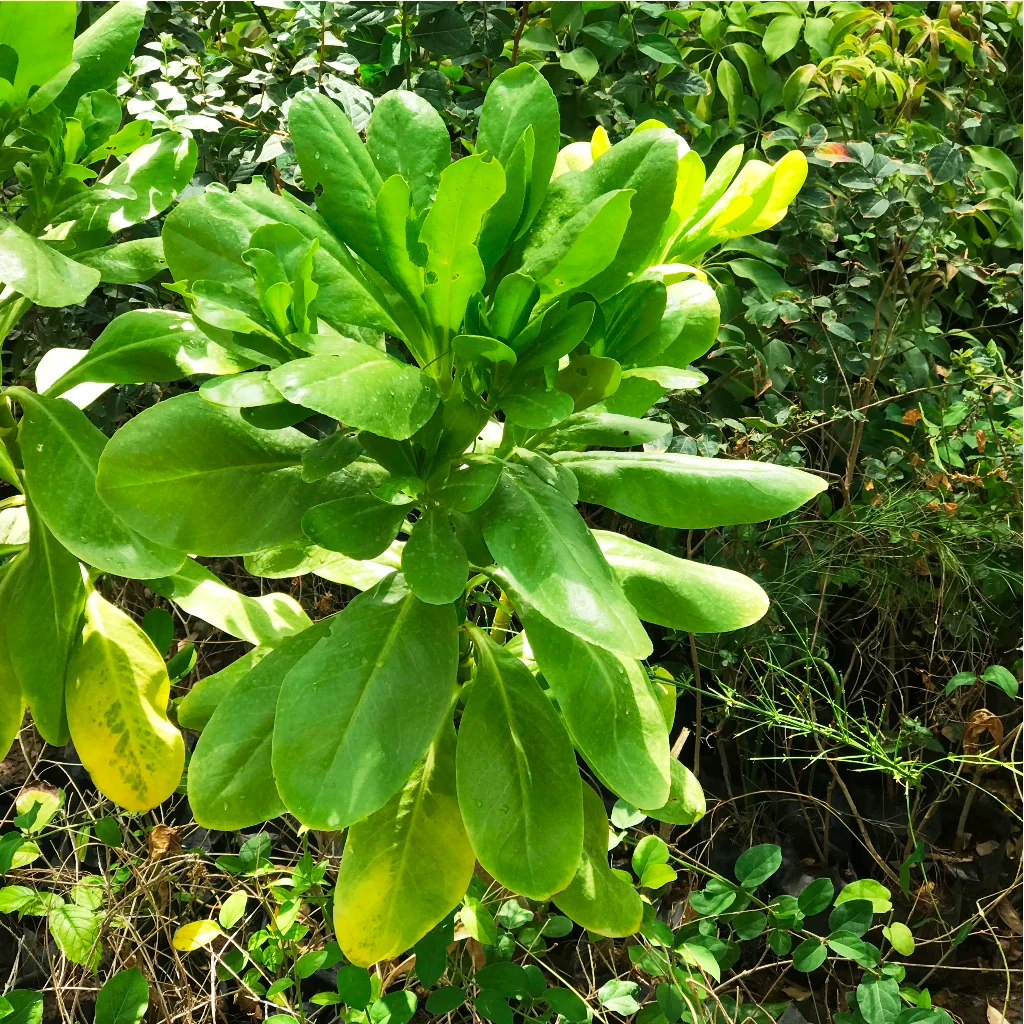
Bhadraksha Scaevola Taccada Plant
Katturudraksham
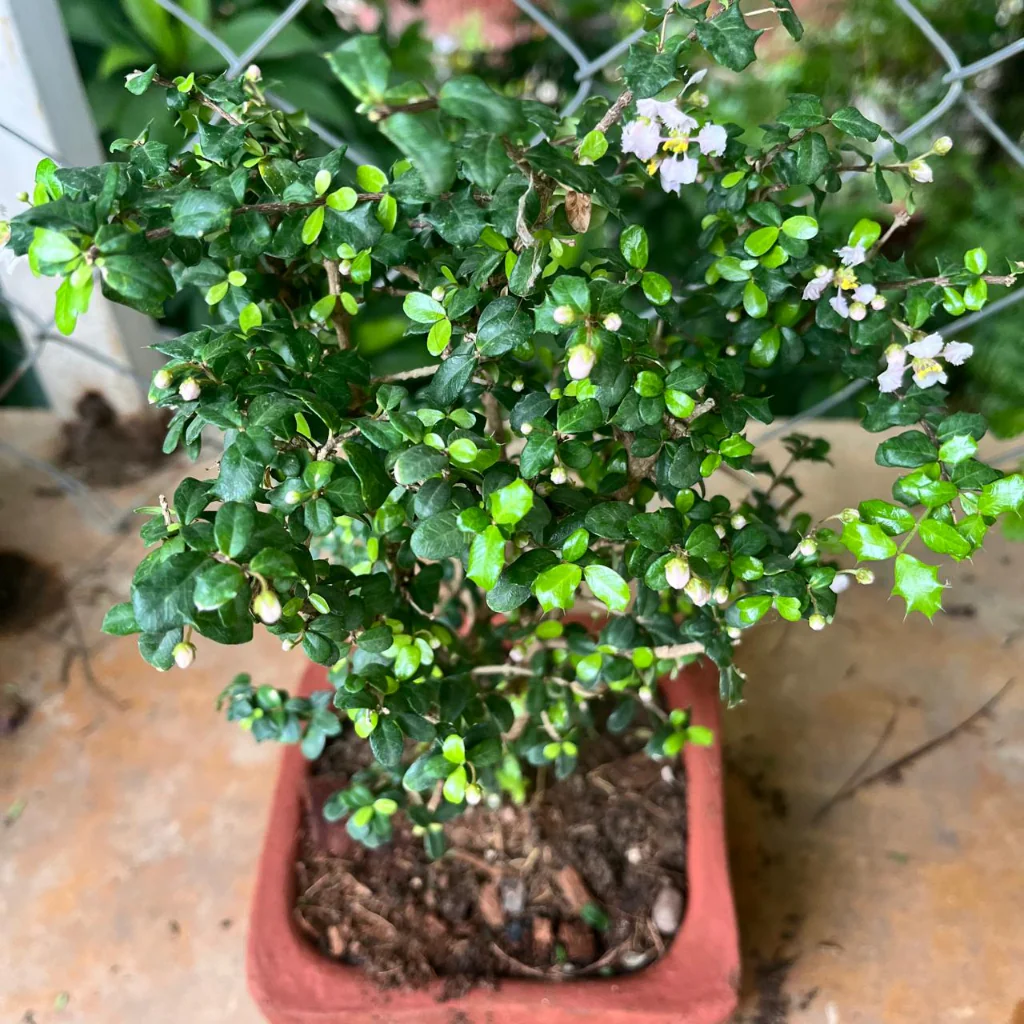
The Bhadraksha (Scaevola taccada), also known as Half Flower, Malayan Rice Paper Plant, Beach Naupaka, is a coastal shrub or small tree belonging to the Goodeniaceae family. It is native to tropical shorelines across Asia, including India.
🌱 Botanical Features
-
Habit: Soft‑wooded shrub or small tree, reaching up to 20–24 ft in ideal conditions.
-
Leaves: Thick, shiny light green, obovate, clustered at branch tips; rough on top, velvety beneath.
-
Flowers: White to pale lilac, fan‑shaped, appearing in axillary clusters. Unique “half‑flower” look with lobes spreading on one side.
-
Fruit: Fleshy drupe, green turning white, about 1–2 cm, crowned by persistent calyx lobes.
🌍 Environment & Growth
-
Thrives in coastal sandy soils with good drainage.
-
Prefers full sun to partial shade; tolerant of salt spray and wind.
-
Often planted as a hedge or windbreak in seaside landscapes.
-
Requires moderate watering; drought‑tolerant once established.
🌸 Uses & Significance
-
Medicinal: Traditionally used for treating conjunctivitis (fruit juice), low back pain, abdominal ache, warts, and stress relief. Ash from the plant is sometimes applied for skin conditions.
-
Cultural: Its resemblance to the Rudraksha tree gives it the name Bhadraksha. Seeds are round and symbolic, though unlike Rudraksha they lack openings.
Landscape Use
Ideally suited for semi-evergreen forest
Product Information
Product Information
Shipping & Returns
Shipping & Returns
Description
Katturudraksham
The Bhadraksha (Scaevola taccada), also known as Half Flower, Malayan Rice Paper Plant, Beach Naupaka, is a coastal shrub or small tree belonging to the Goodeniaceae family. It is native to tropical shorelines across Asia, including India.
🌱 Botanical Features
-
Habit: Soft‑wooded shrub or small tree, reaching up to 20–24 ft in ideal conditions.
-
Leaves: Thick, shiny light green, obovate, clustered at branch tips; rough on top, velvety beneath.
-
Flowers: White to pale lilac, fan‑shaped, appearing in axillary clusters. Unique “half‑flower” look with lobes spreading on one side.
-
Fruit: Fleshy drupe, green turning white, about 1–2 cm, crowned by persistent calyx lobes.
🌍 Environment & Growth
-
Thrives in coastal sandy soils with good drainage.
-
Prefers full sun to partial shade; tolerant of salt spray and wind.
-
Often planted as a hedge or windbreak in seaside landscapes.
-
Requires moderate watering; drought‑tolerant once established.
🌸 Uses & Significance
-
Medicinal: Traditionally used for treating conjunctivitis (fruit juice), low back pain, abdominal ache, warts, and stress relief. Ash from the plant is sometimes applied for skin conditions.
-
Cultural: Its resemblance to the Rudraksha tree gives it the name Bhadraksha. Seeds are round and symbolic, though unlike Rudraksha they lack openings.
Landscape Use
Ideally suited for semi-evergreen forest