Platycerium Bifurcatum Staghorn Fern Plant
Elkhorn ferns
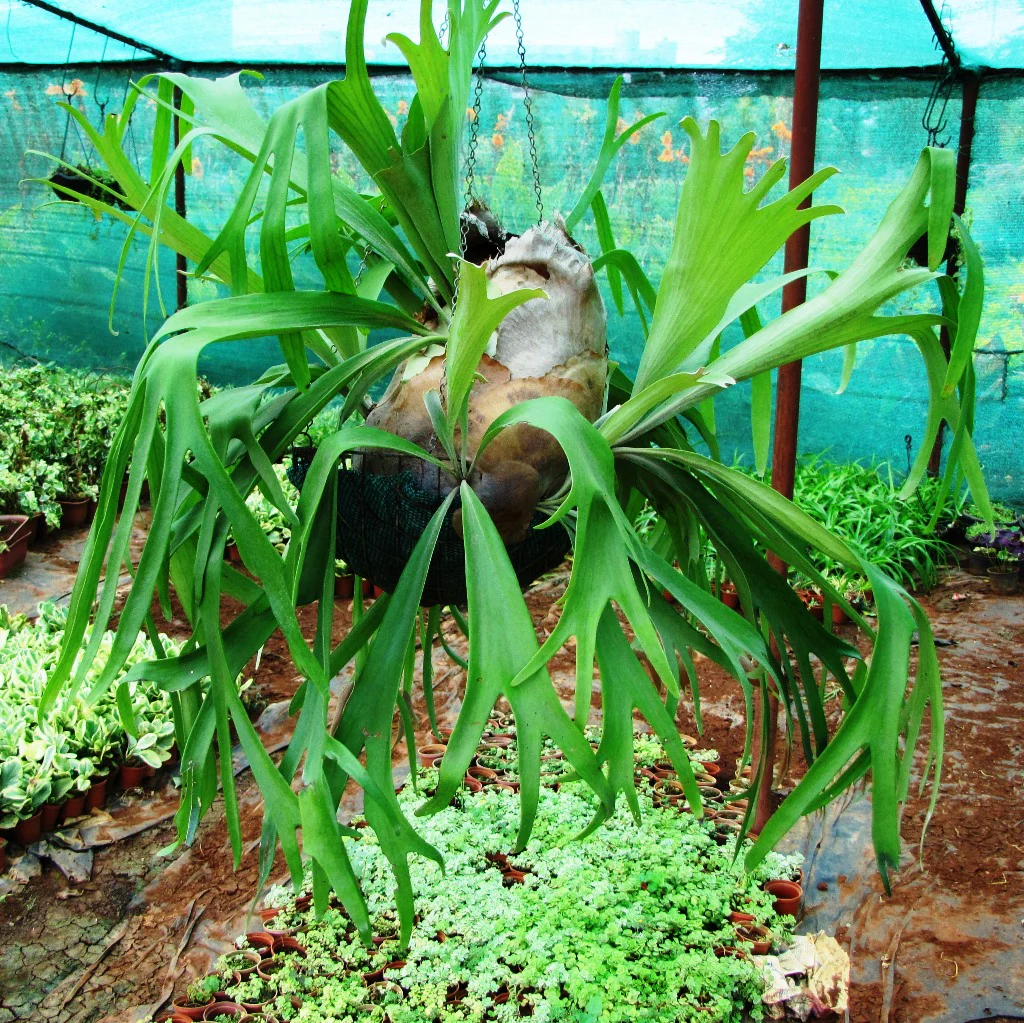
Staghorn Fern (Platycerium bifurcatum)** belongs to the family Polypodiaceae and is native to Asia and Australia. This unusual plant is both an air plant and a fern, though it looks quite different from most ferns. It produces two distinct frond types: small, flat shield fronds that cover the root ball and absorb water and nutrients, and dramatic gray‑green antler fronds that branch outward like stag horns.
The Platycerium bifurcatum variety is particularly prized for its deeply forked, bifurcated fronds that create a striking antler‑like silhouette. Indoors, these fronds typically reach 3–4 feet in length, while in natural habitats they can grow much larger. This variety is also known for being hardier and more adaptable than other staghorn species, tolerating a wider range of indoor conditions. Its shield fronds form a protective, papery base that helps anchor the plant to mounts or boards, making it ideal for wall displays and hanging arrangements. With its sculptural form and low‑maintenance nature, Platycerium bifurcatum is a standout choice for adding dramatic greenery to interiors
Environment
Platycerium grow best in bright indirect light. These plants can tolerate hotter conditions, but tend to prefer the range between 60-80 degrees as an optimal zone
As an epiphitic plant, it has roots which grasp onto wooden surfaces to hold them in place. Water is absorbed directly through the leaves of the plant. While the roots need water as well, they do not need it as often. Secure the plant to board, or use peat or sphagnum moss, coconut coir, or an extremely well-draining potting soil
Water sparingly, increasing frequency during hot/dry periods. Monthly applications of a diluted balanced fertilizer during spring and summer. Every other month through fall /winter. If the tips of antler fronds begin to brown, fern is under watered, and one should increase the frequency of watering. If the bases of the antler fronds begin to blacken, plant is being over watered, and there is need to cut back the frequency.
More humidity will generally mean less watering is necessary. Placing the plant in a bathroom or other humid location will help keep it happy without needing to water.
Landscape Use
The Staghorn fern looks much different and makes an excellent hanging specimen.
Product Information
Product Information
Shipping & Returns
Shipping & Returns
Description
Elkhorn ferns
Staghorn Fern (Platycerium bifurcatum)** belongs to the family Polypodiaceae and is native to Asia and Australia. This unusual plant is both an air plant and a fern, though it looks quite different from most ferns. It produces two distinct frond types: small, flat shield fronds that cover the root ball and absorb water and nutrients, and dramatic gray‑green antler fronds that branch outward like stag horns.
The Platycerium bifurcatum variety is particularly prized for its deeply forked, bifurcated fronds that create a striking antler‑like silhouette. Indoors, these fronds typically reach 3–4 feet in length, while in natural habitats they can grow much larger. This variety is also known for being hardier and more adaptable than other staghorn species, tolerating a wider range of indoor conditions. Its shield fronds form a protective, papery base that helps anchor the plant to mounts or boards, making it ideal for wall displays and hanging arrangements. With its sculptural form and low‑maintenance nature, Platycerium bifurcatum is a standout choice for adding dramatic greenery to interiors
Environment
Platycerium grow best in bright indirect light. These plants can tolerate hotter conditions, but tend to prefer the range between 60-80 degrees as an optimal zone
As an epiphitic plant, it has roots which grasp onto wooden surfaces to hold them in place. Water is absorbed directly through the leaves of the plant. While the roots need water as well, they do not need it as often. Secure the plant to board, or use peat or sphagnum moss, coconut coir, or an extremely well-draining potting soil
Water sparingly, increasing frequency during hot/dry periods. Monthly applications of a diluted balanced fertilizer during spring and summer. Every other month through fall /winter. If the tips of antler fronds begin to brown, fern is under watered, and one should increase the frequency of watering. If the bases of the antler fronds begin to blacken, plant is being over watered, and there is need to cut back the frequency.
More humidity will generally mean less watering is necessary. Placing the plant in a bathroom or other humid location will help keep it happy without needing to water.
Landscape Use
The Staghorn fern looks much different and makes an excellent hanging specimen.