Agapanthus 'Praecox' (Bulbs)
Lily of the Nile
Family
Amaryllidaceae
Origin
South Africa
Description
Agapanthus are clump-forming perennials with narrowly strap-shaped leaves, evergreen in some species, and erect stems bearing umbels of funnel-shaped blue or white flowers
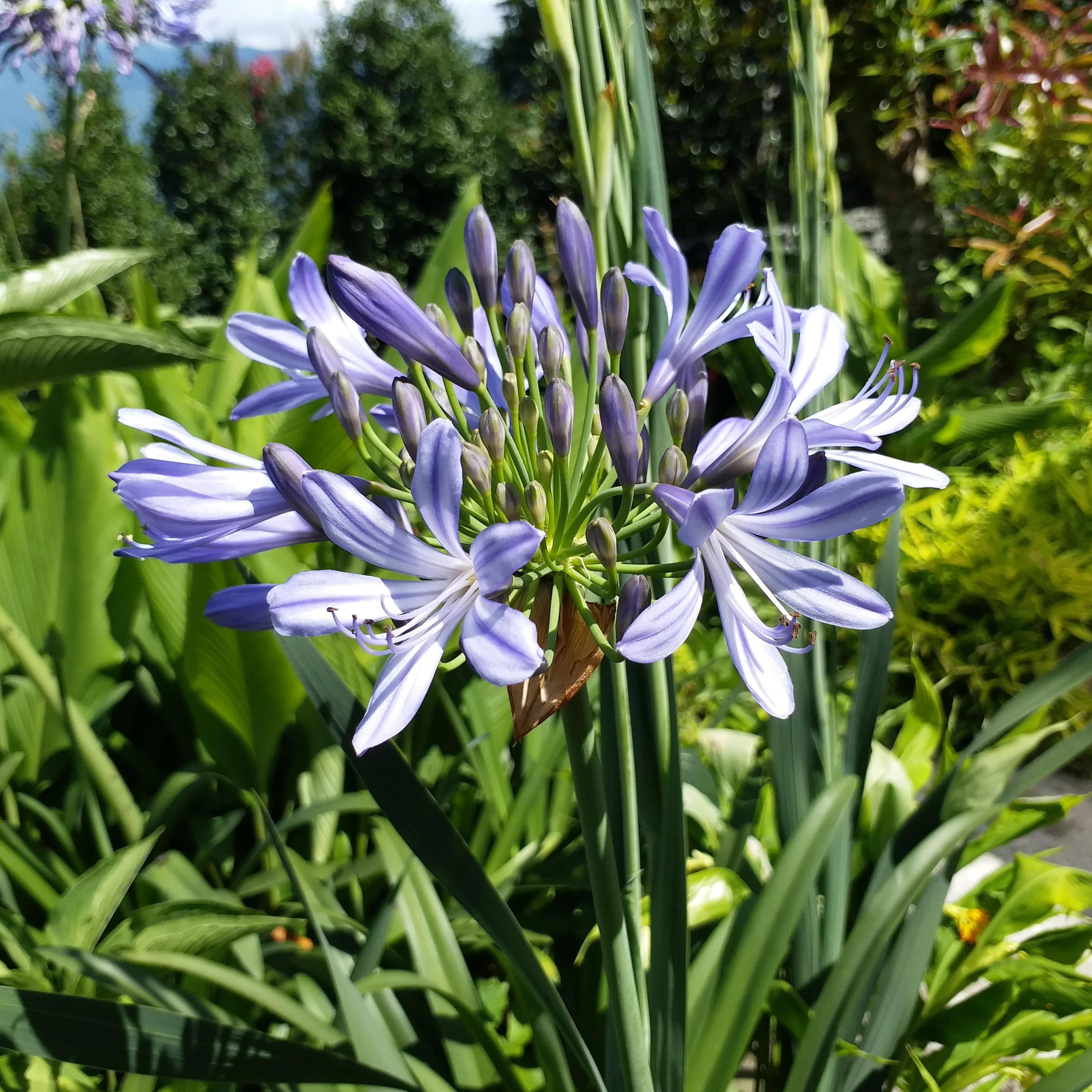
Agapanthus praecox Blue is a well-known hardy, evergreen plant has attractive strap-like leaves and umbels of sky-blue flowers that are borne on long stalks. They make good cut flowers.
Agapanthus 'Praecox' features blue, trumpet-shaped flowers rising above tidy foliage clusters. It blooms from June to August in plains and from July to September in hilly regions. For refined summer color, plant bulbs between February and April in plains or from March to May in hills.
Environment
Agapanthus grow best in well-drained soil, in a sunny site that receives sun for most of the day. On heavy soils, mix in grit when planting. Spacing should be 30cm apart and with crowns 5cm (2in) below the ground.
Use a loam based compost with slow release feed granules added for long term feed. Ensure that you feed with during the growing season.
Agapanthus doesn't like to be potted into pots that are too spacious as this will encourage leaf growth rather than flower production. Ideally, they perform best where root development is restricted but the plants are well watered and fed.
Although plants flower well in pots if the roots are constricted, they should not be allowed to become completely root bound and should be split and replanted in fresh compost if the roots become too congested, otherwise flowering will suffer.
It may take two or three years for plants to establish before flowering really takes off, but after this they will grow in to long-flowering clumps. To maintain health and performance, divide the plant once every three years
Agapanthus can be reluctant to flower if subjected to drought conditions after flowering. To ensure a good display the following year, keep plants moist until autumn after flowers start to fade, which will encourage the development of new flower buds.
Landscape
Agapanthus makes a lovely back border or focal plant due to its height, beautiful trumpet-shaped flowers and leaf texture
Product Information
Product Information
Shipping & Returns
Shipping & Returns
Description
Lily of the Nile
Family
Amaryllidaceae
Origin
South Africa
Description
Agapanthus are clump-forming perennials with narrowly strap-shaped leaves, evergreen in some species, and erect stems bearing umbels of funnel-shaped blue or white flowers
Agapanthus praecox Blue is a well-known hardy, evergreen plant has attractive strap-like leaves and umbels of sky-blue flowers that are borne on long stalks. They make good cut flowers.
Agapanthus 'Praecox' features blue, trumpet-shaped flowers rising above tidy foliage clusters. It blooms from June to August in plains and from July to September in hilly regions. For refined summer color, plant bulbs between February and April in plains or from March to May in hills.
Environment
Agapanthus grow best in well-drained soil, in a sunny site that receives sun for most of the day. On heavy soils, mix in grit when planting. Spacing should be 30cm apart and with crowns 5cm (2in) below the ground.
Use a loam based compost with slow release feed granules added for long term feed. Ensure that you feed with during the growing season.
Agapanthus doesn't like to be potted into pots that are too spacious as this will encourage leaf growth rather than flower production. Ideally, they perform best where root development is restricted but the plants are well watered and fed.
Although plants flower well in pots if the roots are constricted, they should not be allowed to become completely root bound and should be split and replanted in fresh compost if the roots become too congested, otherwise flowering will suffer.
It may take two or three years for plants to establish before flowering really takes off, but after this they will grow in to long-flowering clumps. To maintain health and performance, divide the plant once every three years
Agapanthus can be reluctant to flower if subjected to drought conditions after flowering. To ensure a good display the following year, keep plants moist until autumn after flowers start to fade, which will encourage the development of new flower buds.
Landscape
Agapanthus makes a lovely back border or focal plant due to its height, beautiful trumpet-shaped flowers and leaf texture