Grape Hyacinth (Mix Bulbs )
Muscari armeniacum
Family
Asparagaceae
Origin
South Africa
Description
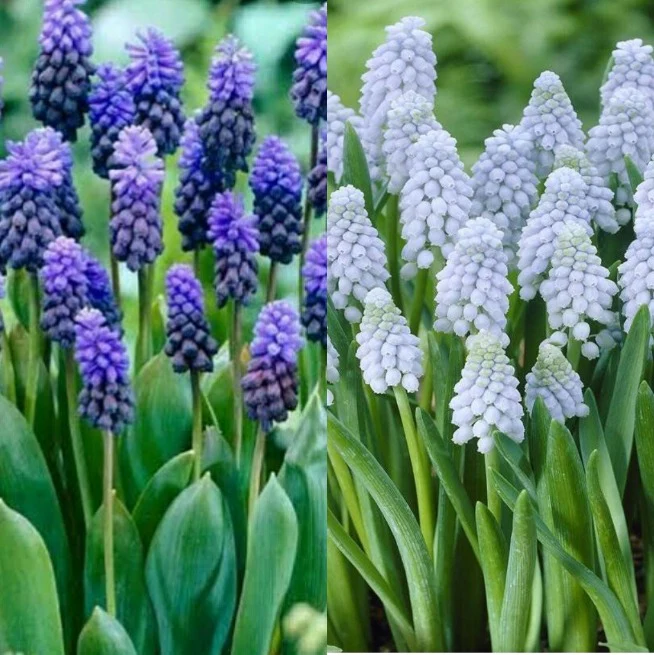
Grape hyacinths are small spring-blooming bulbs, so named because of the tight little flower clusters that resemble grapes. These plants are smaller and only get about 6 to 8 inches (16 to 20 cm.) high.
These premium bulbs produce 1-3 robust flowering stems, each showcasing 20-40 compactly arranged florets in deep blue with distinctive white-rimmed edges. Blooms emerge sequentially from the base upward, creating an elegant beaded-stem appearance throughout the inflorescence. The mildly sweet fragrance carries subtle grassy or grape undertones, enhancing sensory appeal in garden beds and potted displays.
Flowering windows span January-March in plains and February-April in hill regions. Optimal planting occurs October-November across all zones for vigorous establishment and consistent spring performance.
Environment
Grape hyacinths start from small fleshy little bulbs. They does best in full sun but tolerates part shade.
Plant the bulbs in the fall, placing bulbs 3 to 4 inches deep and 2 inches apart in any well-drained soil will produce good results. Grape hyacinths are most fond of somewhat sandy soil, but they do well in pretty much all but the soggiest soils. Hyacinths like a fair amount of moisture during the spring, but the soil should be allowed to dry out as the season progresses. This helps to prevent bulb rot issues.
Grape hyacinths require a cool winter period in order to bloom.
The plants benefit from bone meal applied at planting and after blooming. Reduce watering after the foliage begins to die back.
Landscape Use
Grape hyacinths are good for planting in rock gardens, in the front of beds and borders, or along walkways and paths.
Product Information
Product Information
Shipping & Returns
Shipping & Returns
Description
Muscari armeniacum
Family
Asparagaceae
Origin
South Africa
Description
Grape hyacinths are small spring-blooming bulbs, so named because of the tight little flower clusters that resemble grapes. These plants are smaller and only get about 6 to 8 inches (16 to 20 cm.) high.
These premium bulbs produce 1-3 robust flowering stems, each showcasing 20-40 compactly arranged florets in deep blue with distinctive white-rimmed edges. Blooms emerge sequentially from the base upward, creating an elegant beaded-stem appearance throughout the inflorescence. The mildly sweet fragrance carries subtle grassy or grape undertones, enhancing sensory appeal in garden beds and potted displays.
Flowering windows span January-March in plains and February-April in hill regions. Optimal planting occurs October-November across all zones for vigorous establishment and consistent spring performance.
Environment
Grape hyacinths start from small fleshy little bulbs. They does best in full sun but tolerates part shade.
Plant the bulbs in the fall, placing bulbs 3 to 4 inches deep and 2 inches apart in any well-drained soil will produce good results. Grape hyacinths are most fond of somewhat sandy soil, but they do well in pretty much all but the soggiest soils. Hyacinths like a fair amount of moisture during the spring, but the soil should be allowed to dry out as the season progresses. This helps to prevent bulb rot issues.
Grape hyacinths require a cool winter period in order to bloom.
The plants benefit from bone meal applied at planting and after blooming. Reduce watering after the foliage begins to die back.
Landscape Use
Grape hyacinths are good for planting in rock gardens, in the front of beds and borders, or along walkways and paths.