Liatris Spicata Bulbs
Dense Gayfeather
Family
Asteraceae
Origin
South Africa
Description
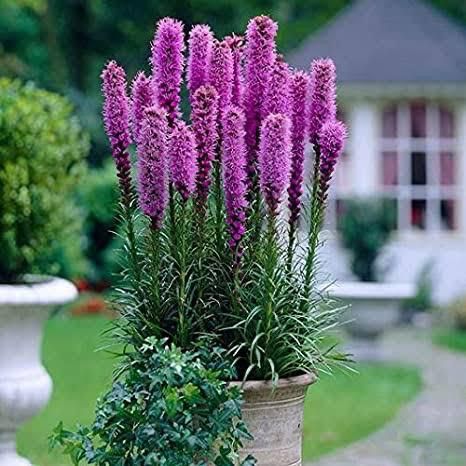
Liatris Spicata, commonly called blazing star or gayfeather, is a resilient perennial wildflower prized for its distinctive bottlebrush-like flower spikes. This hardy specimen produces dense, purple flower heads composed of delicate star-shaped florets arranged vertically along tall, sturdy stems reaching up to 6 feet. The plant develops a basal clump of narrow, linear foliage that transitions to bronze tones during autumn months.
Blooming from June through September depending on climate zone, these striking purple spikes serve dual purposes—attracting pollinators to garden landscapes and providing exceptional cut flower material. The elongated inflorescence and feathery styles characteristic of this species make it botanically distinctive. Plant bulbs between February and May for optimal establishment and flowering performance.
Environment
Liatris Spicata is well-suited for various climates and thrives in full sun exposure.
These bulbs are best planted in the spring following the last frost date, with a spacing of 12 to 15 inches and a depth of two to four inches.
It is essential to choose well-draining soil with a slightly acidic or neutral pH level. Avoid clay or overly rich soil for optimal growth.
When first planted, ensure thorough watering followed by only watering during the hottest months. During winter, it prefers drier conditions.
While not heavy feeders, adding a balanced flower fertilizer in the spring can benefit plants in poor soil conditions. In most cases, these bulbs do not require any additional feeding.
Landscape Use
Incorporate these wildflowers into a border or meadow landscape.
Product Information
Product Information
Shipping & Returns
Shipping & Returns
Description
Dense Gayfeather
Family
Asteraceae
Origin
South Africa
Description
Liatris Spicata, commonly called blazing star or gayfeather, is a resilient perennial wildflower prized for its distinctive bottlebrush-like flower spikes. This hardy specimen produces dense, purple flower heads composed of delicate star-shaped florets arranged vertically along tall, sturdy stems reaching up to 6 feet. The plant develops a basal clump of narrow, linear foliage that transitions to bronze tones during autumn months.
Blooming from June through September depending on climate zone, these striking purple spikes serve dual purposes—attracting pollinators to garden landscapes and providing exceptional cut flower material. The elongated inflorescence and feathery styles characteristic of this species make it botanically distinctive. Plant bulbs between February and May for optimal establishment and flowering performance.
Environment
Liatris Spicata is well-suited for various climates and thrives in full sun exposure.
These bulbs are best planted in the spring following the last frost date, with a spacing of 12 to 15 inches and a depth of two to four inches.
It is essential to choose well-draining soil with a slightly acidic or neutral pH level. Avoid clay or overly rich soil for optimal growth.
When first planted, ensure thorough watering followed by only watering during the hottest months. During winter, it prefers drier conditions.
While not heavy feeders, adding a balanced flower fertilizer in the spring can benefit plants in poor soil conditions. In most cases, these bulbs do not require any additional feeding.
Landscape Use
Incorporate these wildflowers into a border or meadow landscape.