Ornithogalum Umbellatum-Star of Bethlehem (Bulbs)
Ornithogalum Umbellatum
Family
Hyacinthaceae
Origin
South Africa
Description
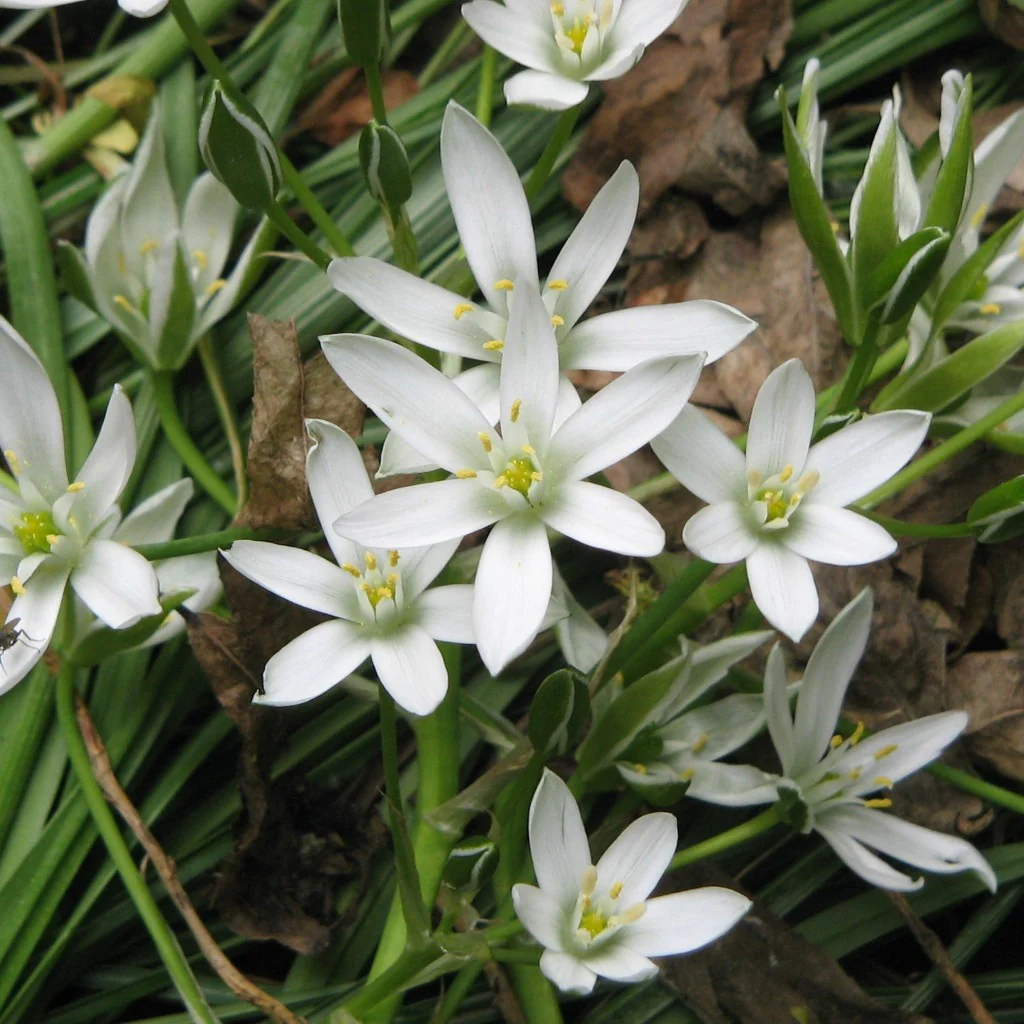
Star of Bethlehem is a hardy bulbous perennial prized for its distinctive flowering behavior and architectural form. Slender, semi-erect foliage emerges in basal clusters, reaching 6-12 inches before gracefully declining as flowering stems ascend in late spring through early summer. Each stem produces 10-20 pristine white flowers, approximately 3/4 inch across, clustered in terminal umbels with characteristic green striping on the reverse. The blooms display a remarkable photoperiodic response, opening at midday and closing at dusk or during cloudy conditions.
Regional flowering windows span February-April in plains and March-May in hill zones. Establish bulbs during the October-November planting window across both terrain types for reliable naturalization and consistent seasonal performance.
Environment
It prefers a sunny postion in a well mulched, well drained soil. They can also be grown in position that gets light, dappled shade. Fertilise with a liquid fertiliser through the growing season. After flowering, the foliage should be left until the plant dies down, as this feeds the next years growth. The plant will die down to ground level in late autumn to winter, and reshoot in spring. They can be left in the ground over winter.
Landscape Use
Flower borders and beds
Caution
All parts of the plant are poisonous, and contact with the sap may cause skin rashes. Ideal for naturalising but may become invasive
Product Information
Product Information
Shipping & Returns
Shipping & Returns
Description
Ornithogalum Umbellatum
Family
Hyacinthaceae
Origin
South Africa
Description
Star of Bethlehem is a hardy bulbous perennial prized for its distinctive flowering behavior and architectural form. Slender, semi-erect foliage emerges in basal clusters, reaching 6-12 inches before gracefully declining as flowering stems ascend in late spring through early summer. Each stem produces 10-20 pristine white flowers, approximately 3/4 inch across, clustered in terminal umbels with characteristic green striping on the reverse. The blooms display a remarkable photoperiodic response, opening at midday and closing at dusk or during cloudy conditions.
Regional flowering windows span February-April in plains and March-May in hill zones. Establish bulbs during the October-November planting window across both terrain types for reliable naturalization and consistent seasonal performance.
Environment
It prefers a sunny postion in a well mulched, well drained soil. They can also be grown in position that gets light, dappled shade. Fertilise with a liquid fertiliser through the growing season. After flowering, the foliage should be left until the plant dies down, as this feeds the next years growth. The plant will die down to ground level in late autumn to winter, and reshoot in spring. They can be left in the ground over winter.
Landscape Use
Flower borders and beds
Caution
All parts of the plant are poisonous, and contact with the sap may cause skin rashes. Ideal for naturalising but may become invasive