Rajnigandha-Polianthes tuberosa 'Pink Sapphire' (Bulbs)
"Double Petal Pink Rajnigandha"
Family
Asparagaceae
Origin
Taiwan
Description
Tuberose, (Polianthes tuberosa) is a perennial tuber or tuberous roots of the asparagus family. The tuberose has long bright green leaves , about 1–1.5 ft long and up to 13 mm wide , clustered at the base and smaller clasping leaves along the stem.
The inflorescence is a spike, reaching up to 3 ft high, with pure white waxy flowers. The flowers are tubular, with a tube up to 2.5 in long, separating into six flaring segments (tepals) at the end, and are strongly fragrant and bloom at night. . There are six stamens, inserted into the tube of the flower, and a three-part stigma.
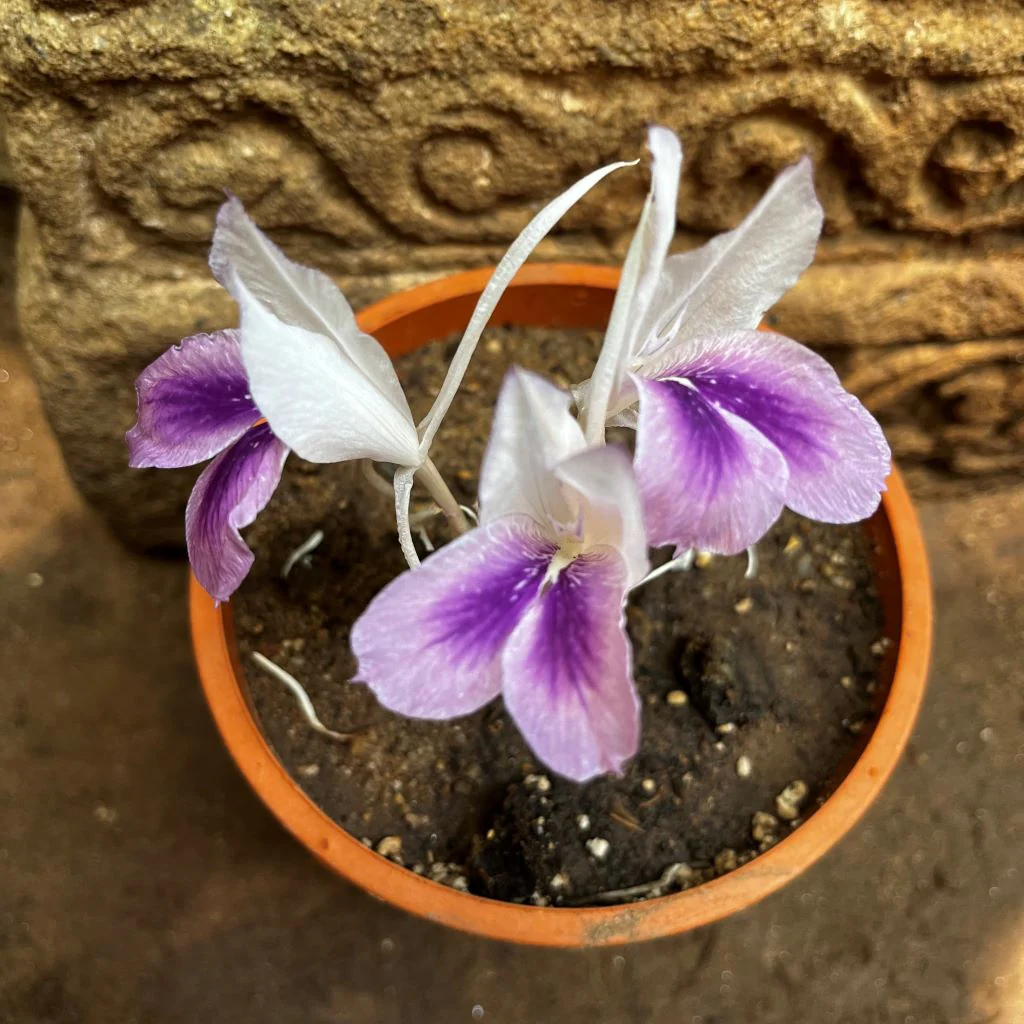
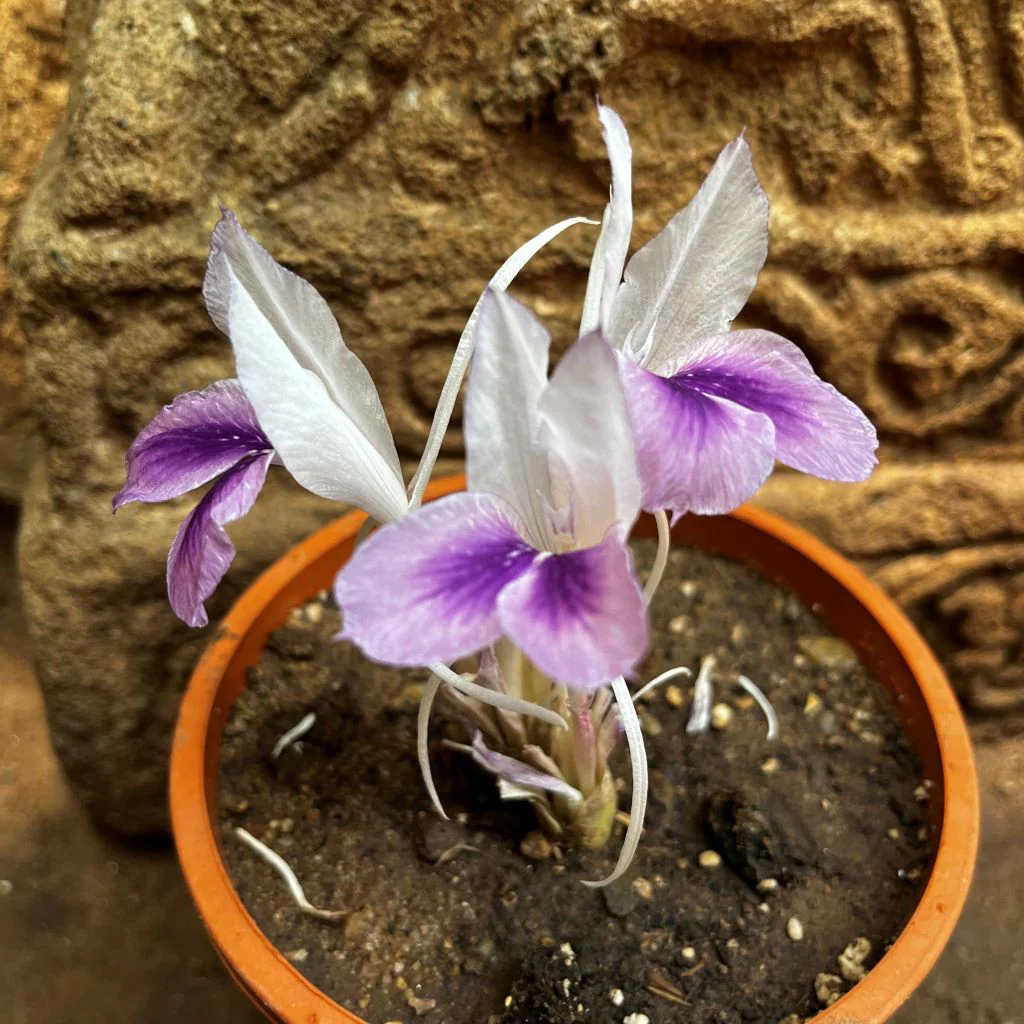
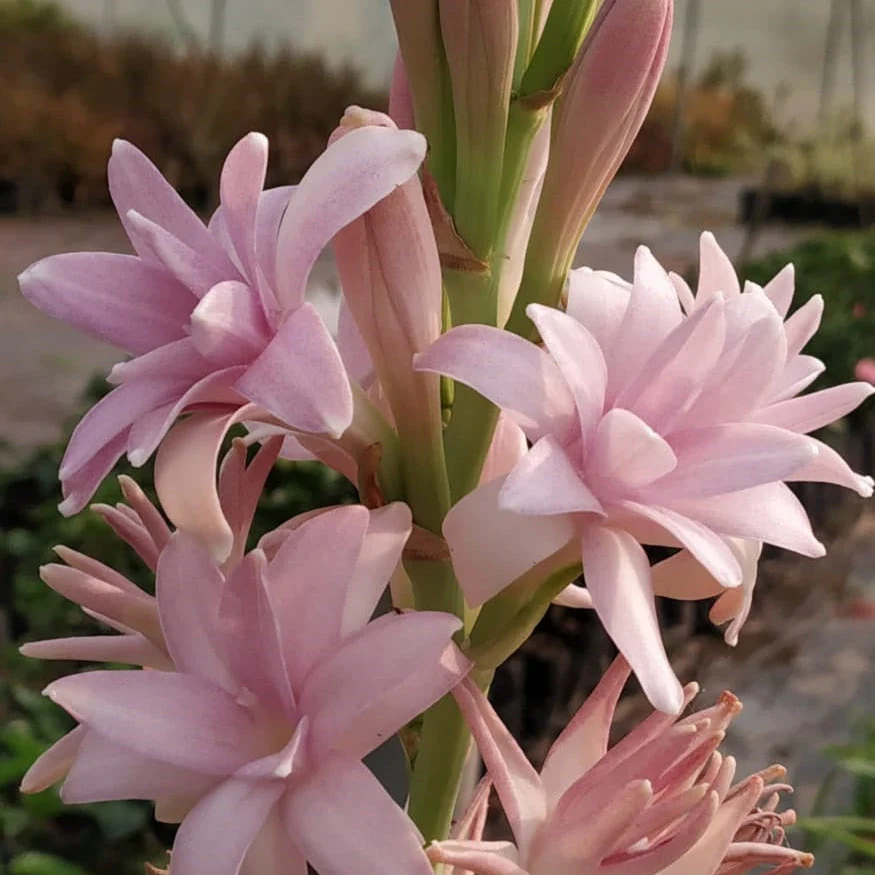
Introduce an uncommon botanical treasure to your garden with Polianthes tuberosa 'Pink Sapphire', a hybrid tuberose celebrated for its distinctive allure and powerful fragrance. This remarkable cultivar produces tall, densely-flowered spikes measuring 20-40 cm, showcasing fully double petals in a nuanced medium pink with smoky and mauve undertones. The blossoms unfold progressively upward, each forming an exquisite star-shaped structure that emanates a rich, persistent scent both day and night. A sophisticated selection for gardeners seeking botanical rarity.
Plant bulbs February-April in plains or March-May in hilly regions for summer-autumn flowering (July-October in plains; August-November in hills).
Environment
Tuberose are best planted in a sunny location. The require full sunlight to bloom.
Well drained loamy soil having a pH of 6.5-7.5 is ideal for the plant. Plant the bulbs in the fall, placing bulbs 3 to 4 inches deep and 2 inches apart in any well-drained soil will produce good results. Tuberose flower in mid to late summer, typically 90-120 days after planting.
Tuberose require rest during winter period in order to bloom in summers.
Tuberose plants are heavy feeders and appreciate applications of 8-8-8 fertilizer while they are actively growing.
The plants benefit from bone meal applied at planting and after blooming. Reduce watering after the foliage begins to die back.
Landscape Use
Tuberoses are excellent in the garden or in pots. Their tall stems (2-3 ft.) and rather sparse, grass-like foliage make them ideal for inter-planting.
Original: $10.78
-70%$10.78
$3.23Product Information
Product Information
Shipping & Returns
Shipping & Returns
Description
"Double Petal Pink Rajnigandha"
Family
Asparagaceae
Origin
Taiwan
Description
Tuberose, (Polianthes tuberosa) is a perennial tuber or tuberous roots of the asparagus family. The tuberose has long bright green leaves , about 1–1.5 ft long and up to 13 mm wide , clustered at the base and smaller clasping leaves along the stem.
The inflorescence is a spike, reaching up to 3 ft high, with pure white waxy flowers. The flowers are tubular, with a tube up to 2.5 in long, separating into six flaring segments (tepals) at the end, and are strongly fragrant and bloom at night. . There are six stamens, inserted into the tube of the flower, and a three-part stigma.
Introduce an uncommon botanical treasure to your garden with Polianthes tuberosa 'Pink Sapphire', a hybrid tuberose celebrated for its distinctive allure and powerful fragrance. This remarkable cultivar produces tall, densely-flowered spikes measuring 20-40 cm, showcasing fully double petals in a nuanced medium pink with smoky and mauve undertones. The blossoms unfold progressively upward, each forming an exquisite star-shaped structure that emanates a rich, persistent scent both day and night. A sophisticated selection for gardeners seeking botanical rarity.
Plant bulbs February-April in plains or March-May in hilly regions for summer-autumn flowering (July-October in plains; August-November in hills).
Environment
Tuberose are best planted in a sunny location. The require full sunlight to bloom.
Well drained loamy soil having a pH of 6.5-7.5 is ideal for the plant. Plant the bulbs in the fall, placing bulbs 3 to 4 inches deep and 2 inches apart in any well-drained soil will produce good results. Tuberose flower in mid to late summer, typically 90-120 days after planting.
Tuberose require rest during winter period in order to bloom in summers.
Tuberose plants are heavy feeders and appreciate applications of 8-8-8 fertilizer while they are actively growing.
The plants benefit from bone meal applied at planting and after blooming. Reduce watering after the foliage begins to die back.
Landscape Use
Tuberoses are excellent in the garden or in pots. Their tall stems (2-3 ft.) and rather sparse, grass-like foliage make them ideal for inter-planting.